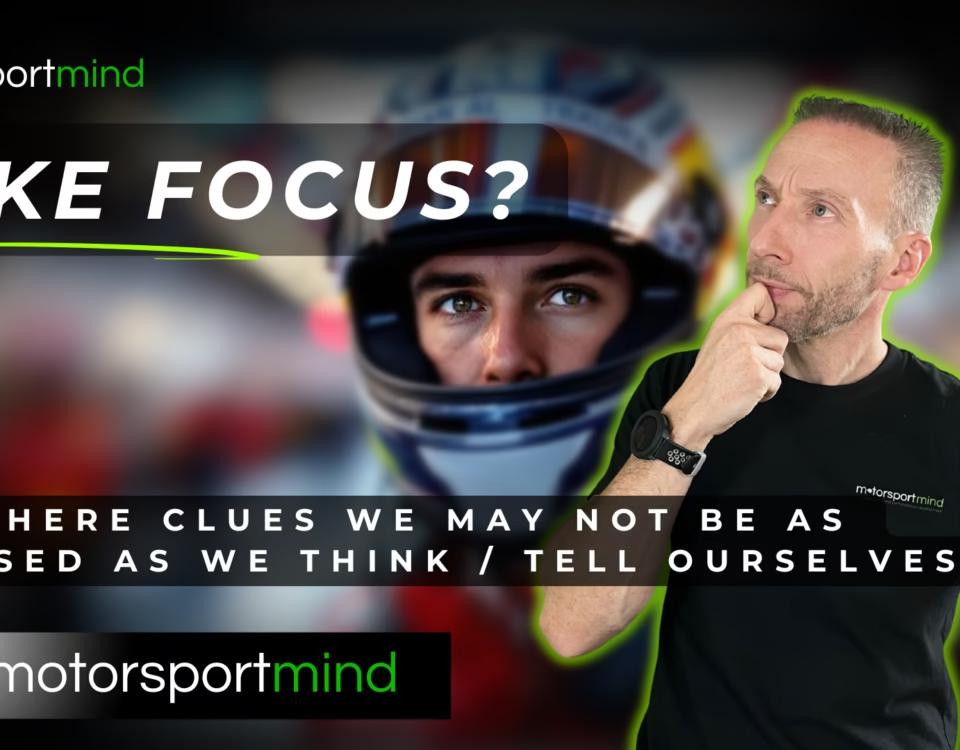
Calm vs Relaxed: Understanding the Difference and Responsibility in Racing

Hi, everybody. Greg here. In this month's blog post, we're going to dive deep into two intriguing topics: understanding the nuances between calmness and relaxation, and exploring what responsibilities a racer holds during competition. These insights emerged from recent conversations with drivers and riders, aimed at honing our mental game on the track.
Calm vs Relaxed: Are They the Same?
Many of us have pondered whether being calm equates to being relaxed. It's a common assumption, but one worth examining closely.
Are calmness and relaxation synonymous?
The answer: not quite. While they share similarities, being calm fundamentally revolves around the concept of control. Here's why:
The CRC Triangle: Calm, Relaxed, Confident
Understanding the CRC (Calm, Relaxed, Confident) triangle is crucial here. We’ve delved into these aspects in previous sessions, and while they are connected, each serves its unique role.
-
Calmness: Signifies control. Imagine a stressful situation where you feel the tension building up. Calmness is when, despite the stress, you maintain control, resisting the onset of panic.
-
Relaxation: Embodies ease. Unlike calmness, relaxation doesn't align well with stressful environments. The idea of being relaxed amidst tension doesn't sit comfortably—it feels incongruent.
Calmness in Control
In any stressful scenario, the goal is to achieve calmness, which means being in control. This controlled state prevents adverse stress reactions, which can be critical during competitions.
From a physiological standpoint, consider HRV (Heart Rate Variability). When our sympathetic nervous system kicks in—preparing us for fight or flight—we may be ready to compete, yet remain calm by maintaining control over the situation.
This understanding leads us to an important idea in racing: calming is a precondition for performance.
"Calmness means holding the reins, guiding the horse, ensuring it doesn’t bolt due to panic."
Breathing Exercises: A Path to Calmness
Before hitting the track, mastering your breathing is key and can foster a calm state. While relaxation might follow, the primary aim is achieving calmness—especially at the right level for peak performance.
Racing Responsibilities: Focus on Performance, Not Just Results
Another crucial thought point arose from a recent discussion: understanding one's responsibility during races.
What Are You Responsible For?
As a racer, your main responsibility lies in your performance—not the final result. While results are the product of a team effort, performance is fundamentally yours to manage.
Maximize Your Performance Pillars
For optimal success, focus on mastering the three pillars of performance:
-
Technical: Know your machine inside out. Understanding its mechanics, aero, and geometry is vital.
-
Physical: Make sure you’re fit enough to endure the challenges on the track.
-
Mental: Develop mental strategies to keep focused and resilient throughout the race weekend.
Learn from Feedback: Failure Is Feedback
In racing, there's no failure—only feedback. Each race provides valuable insights into areas needing improvement, particularly concerning technical, physical, and mental skills.
The Exercise: Stop, Less, Keep, More, Start
Regularly evaluate your habits and strategies with this exercise:
-
Stop: Identify what isn’t working and eliminate it.
-
Less: Reduce things that hinder your performance.
-
Keep: Continue successful practices.
-
More: Increase efforts in beneficial areas.
-
Start: Initiate new strategies and habits.
By honing in on the necessary adjustments, you align closely with your three performance pillars and ensure every aspect is optimized for success.
Mental Fitness: Prepare for the Unexpected
Mental training isn’t just about crisis management and "waiting for the wheels to fall off". Establish a routine to bolster your resilience, ensuring you arrive at race weekends ready to excel.
Consider if you’re proactively fortifying your mental skills before race day or merely reacting when challenges arise.
Focus on Performance Over Results
Remember, the outcome of a race involves others—the competitors, the team, and external conditions. However, by concentrating solely on your performance, you narrow your focus to one opponent: yourself. This approach simplifies everything, allowing you to channel your energies more effectively.
Conclusion
When you gear up for your next race, reflect on your responsibilities: focus intently on your performance. Understand each aspect of the race weekend, align with the CRC triangle, and ensure your mental and physical preparedness. By adhering to these principles, you're not just setting yourself up for success but becoming a pivotal component of a winning team.
Feel free to leave your thoughts on calm versus relaxed, and your take on performance responsibilities in the comments below. Until next time, take care and keep racing forward!
WATCH THE VIDEO OF THIS BLOG POST BELOW: